Why KNX Home Automation Is a Smart Choice for Future-Ready Homes

Smart home technology is becoming an important part of modern living. Homeowners today expect more than basic lighting control or connected appliances. They want intelligent systems that improve comfort, convenience, energy efficiency and security.
However, technology changes quickly. A smart home system that works well today may become difficult to upgrade if it depends on a closed platform or a single manufacturer.
This is why choosing the right automation architecture is important from the beginning.
KNX Home Automation offers a flexible and scalable approach that allows smart homes to adapt as technology and homeowner requirements change over time.
What Makes a Smart Home Future-Ready?
A future-ready smart home should not be limited to the technology available at the time of installation.
Over the years, homeowners may want to add new lighting zones, automated curtains, advanced HVAC controls, energy monitoring systems, security features or voice assistants.
A future-proof smart home should make these upgrades possible without requiring the entire automation infrastructure to be replaced.
This ability to expand and adapt is one of the main strengths of a well-designed KNX system.
Why Open Protocol Automation Matters
One of the biggest advantages of KNX is its open protocol architecture.
Many conventional automation systems operate within a closed ecosystem. This means homeowners may need to depend on products from the same manufacturer for future upgrades or replacements.
Open protocol automation provides greater flexibility.
KNX allows compatible products from multiple manufacturers to work together within the same automation environment. This gives homeowners and system integrators more freedom when selecting products for different applications.
A KNX-based smart home can integrate functions such as:
- Lighting control
- HVAC automation
- Curtains and blinds
- Smart switches and touch panels
- Energy monitoring
- Sensors
- Security systems
- Mobile control
- Voice assistants
Instead of being restricted to a single product ecosystem, homeowners can choose solutions according to the actual needs of the property.
Reducing Dependence on One Manufacturer
Vendor lock-in can become a major concern with long-term home automation technology.
If a complete system depends on one proprietary platform, homeowners may face limitations when products are discontinued or when newer technologies become available.
KNX Home Automation reduces this dependency because it supports a broad ecosystem of compatible devices.
This means different parts of the system can be upgraded, replaced or expanded without necessarily redesigning the entire automation infrastructure.
For homeowners planning long-term smart living, this flexibility can help protect the original investment.
A Smart Home That Can Grow with Your Needs
Automation requirements often change over time.
A homeowner may begin with lighting and climate control and later want to add:
- Motorised curtains
- Voice assistants
- Additional sensors
- Energy monitoring
- Smart touch panels
- Security functions
- Outdoor lighting automation
- Additional rooms or zones
A scalable KNX system can support these additions without forcing homeowners to start again with a completely new platform.
This makes KNX especially suitable for modern and premium homes where technology requirements may continue evolving.
Integration with New Technologies
Smart home interfaces are constantly improving.
Mobile applications, voice assistants, IoT platforms and intelligent lighting systems are becoming increasingly common.
A future-ready home should be able to adopt these technologies while retaining the reliability of the existing automation system.
KNX can integrate with technologies such as:
- Voice control
- Mobile apps
- DALI lighting
- IoT devices
- Energy-management platforms
- Visualisation systems
- Cloud-based services
This allows homeowners to introduce new technologies without replacing the complete automation infrastructure.
Smarter Energy Management
Smart home automation can also help improve energy efficiency.
Lighting can respond to occupancy. HVAC systems can adjust according to room usage. Automated blinds can help manage daylight and indoor temperature.
By connecting different systems intelligently, KNX Home Automation can help homeowners use energy more efficiently while maintaining comfort.
This makes automation useful not only for convenience but also for better management of household energy consumption.
Why KNX Home Automation Is a Long-Term Choice
The real strength of KNX does not come from one individual feature.
It comes from combining several important advantages:
Interoperability allows compatible products from multiple manufacturers to work together.
Scalability allows the system to grow as requirements change.
Flexibility gives homeowners more freedom when selecting technologies.
Reliability supports essential home functions through a strong automation architecture.
Future adaptability makes it easier to integrate new technologies over time.
Together, these qualities make KNX Home Automation a strong foundation for a future-ready smart home.
Building Smart Homes for the Future
Smart home technology should provide convenience today without creating limitations tomorrow.
As new devices, platforms and technologies continue to emerge, homeowners should be able to improve and expand their automation systems without rebuilding everything from the beginning.
Through open protocol automation, scalability and integration flexibility, KNX provides a practical foundation for creating intelligent homes that can evolve over time.
For homeowners looking beyond short-term smart features and considering long-term technology needs, KNX Home Automation offers a flexible and future-ready approach.
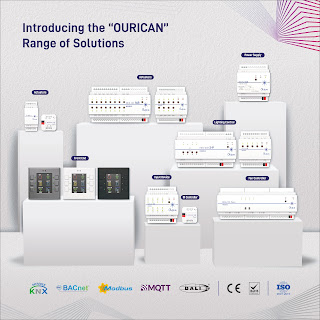
Ourican develops intelligent automation solutions that help create connected, efficient and future-ready residential environments using technologies such as KNX.
.png)
Comments
Post a Comment